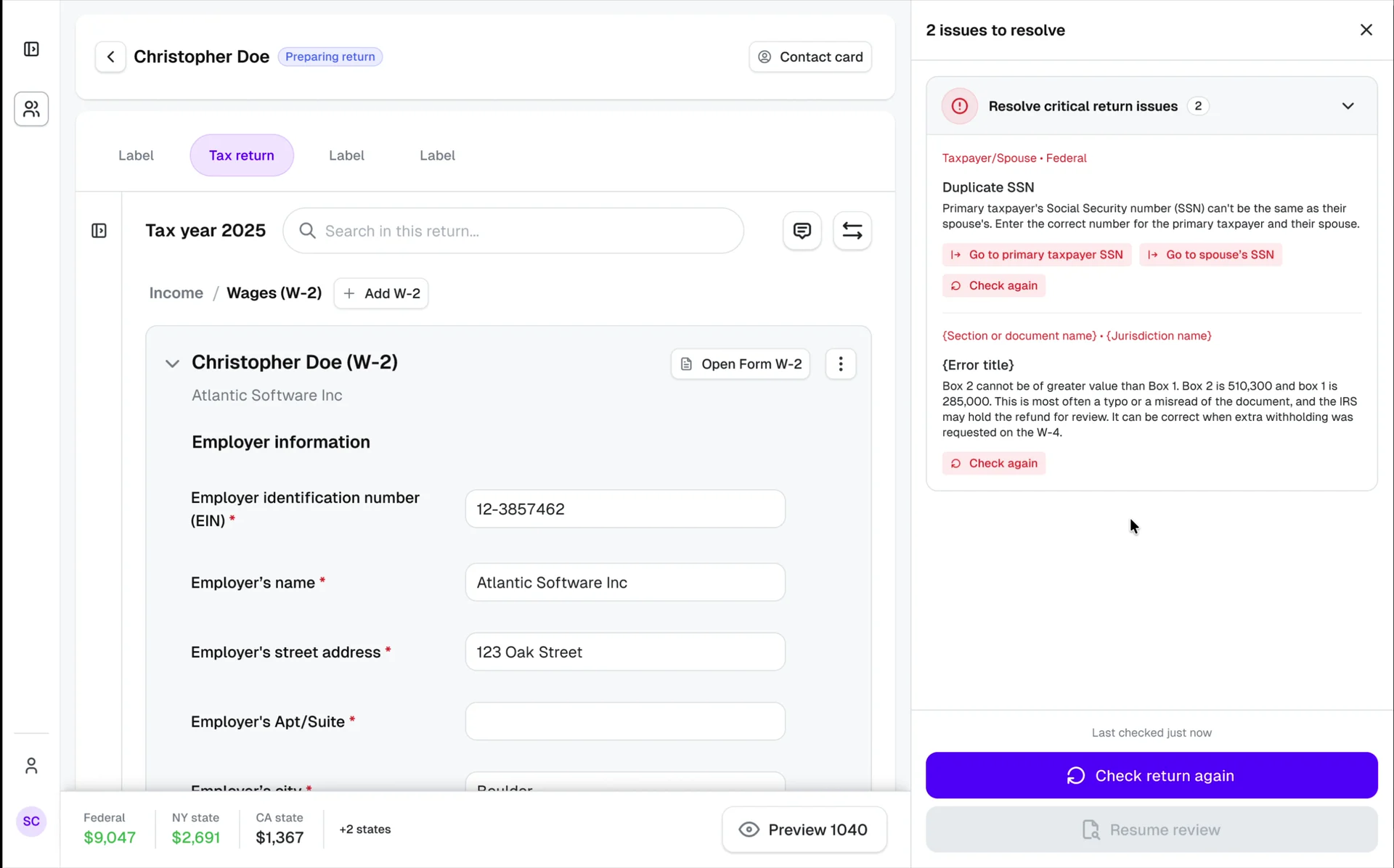
A review is only as good as the return it looked at.
The last step before a return goes out.
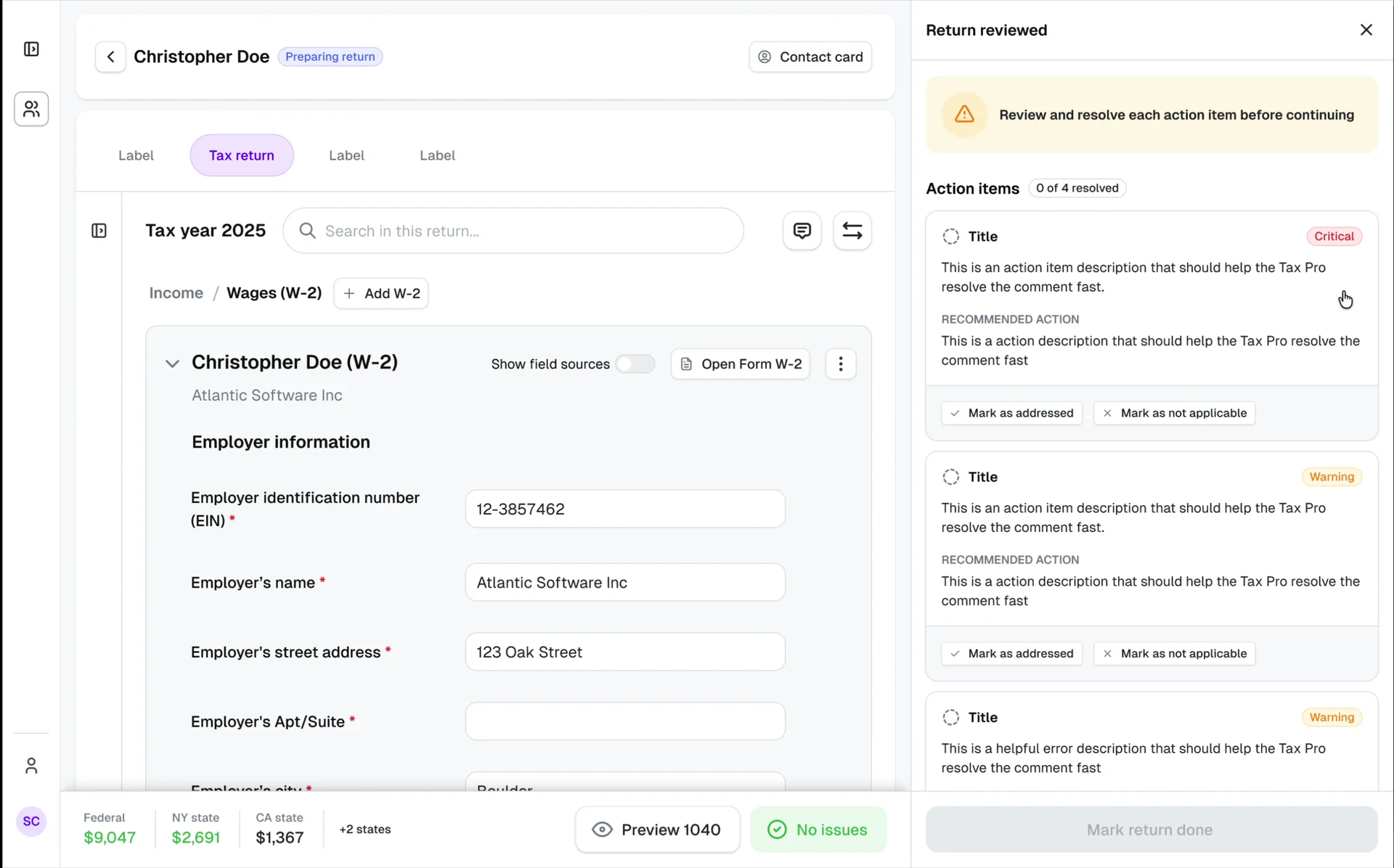
The review comes after the main preparation, when the Pro is usually confident the return is ready, and after the return check has passed with no issues. It takes two to three minutes and ends in a list of warnings and recommendations for the Pro.
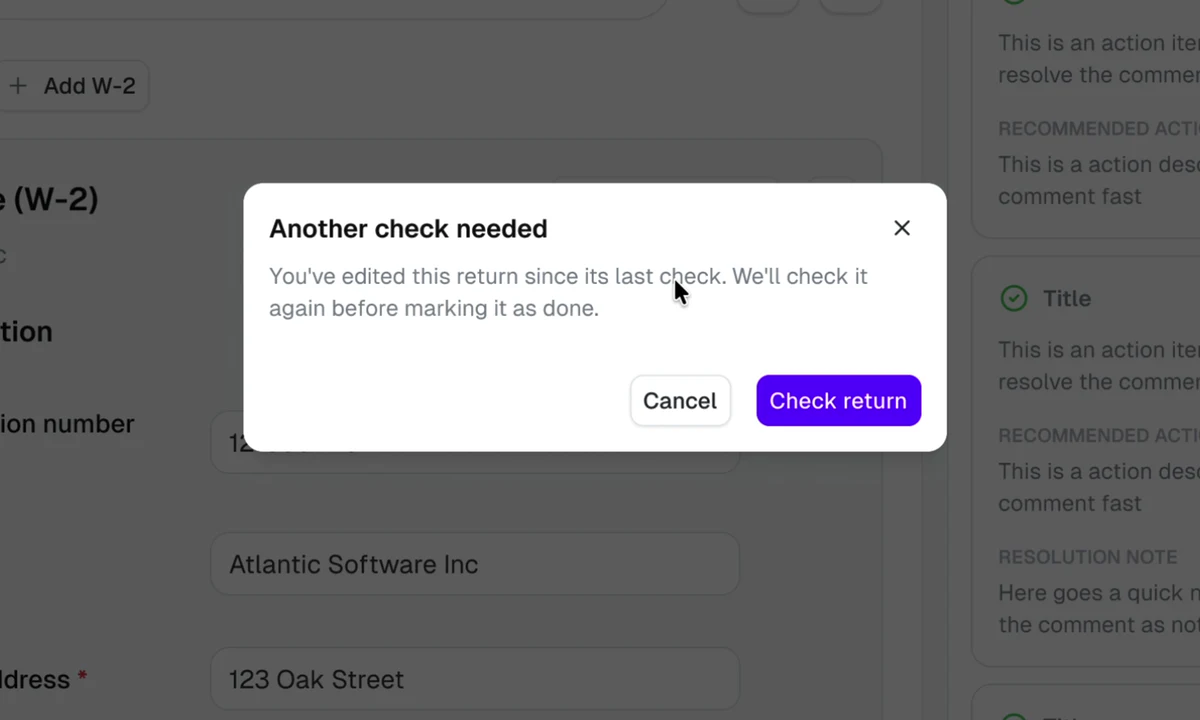
Fixing what the review found can break what the check already cleared.
Action items lead the Pro to change the return. Any change to a checked return can introduce an error, so it needs another check. And a change made after the review can skew the review's own results.
Check, review, resolve, done.
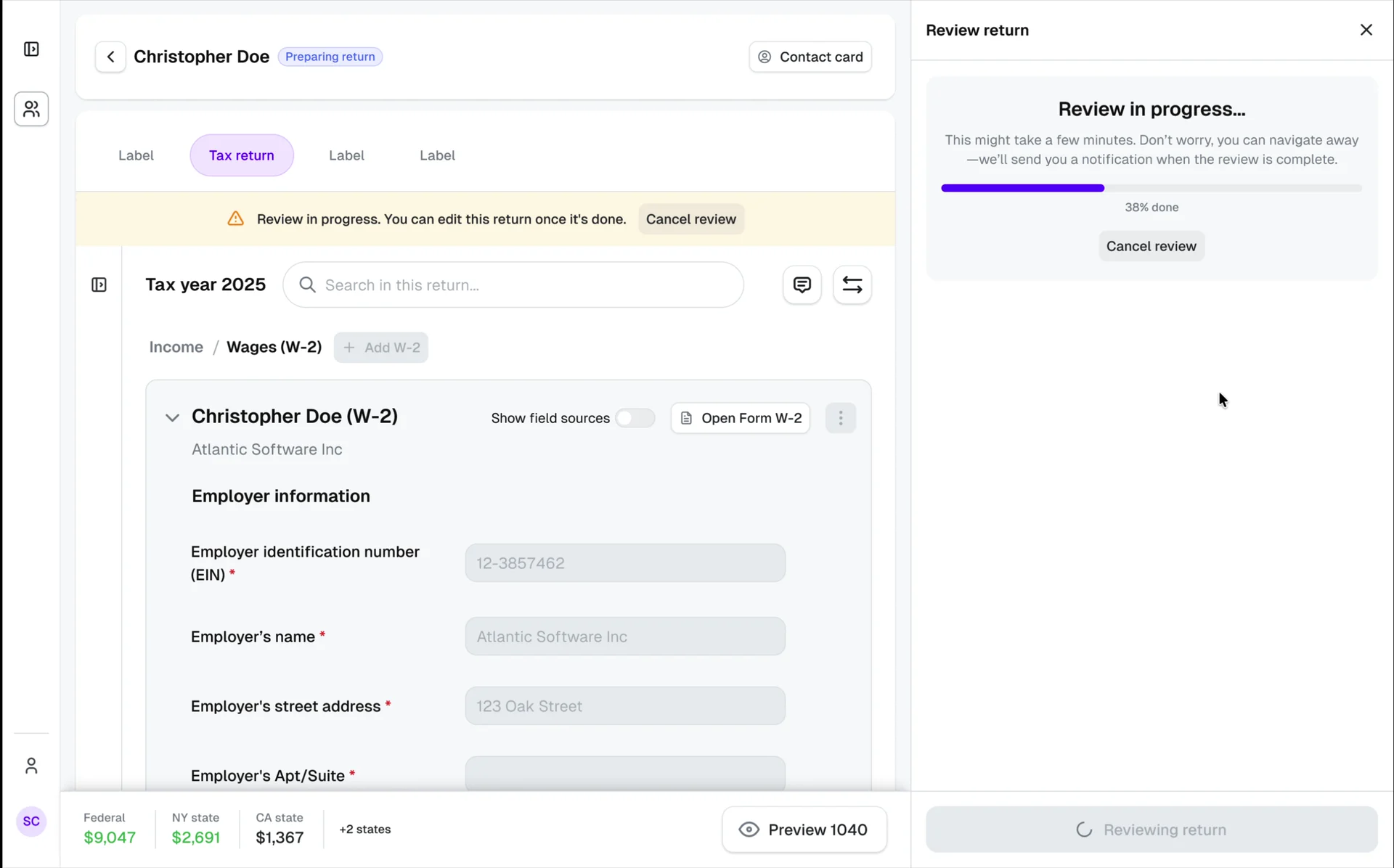
The review runs in a side panel so the return stays in view. While it runs, the return is read-only and the Pro can leave and get notified when it's done.
Edits are paused with a plain reason, and a way to cancel.
Each item is marked addressed or not applicable. The return can't be marked done until every one is resolved.
Match the friction to the severity of the change.
Beyond the happy paths, I designed two case flows. Every edit requires another check. Only the serious ones ask the Pro to run the review again.
Missing fields and field-level errors.
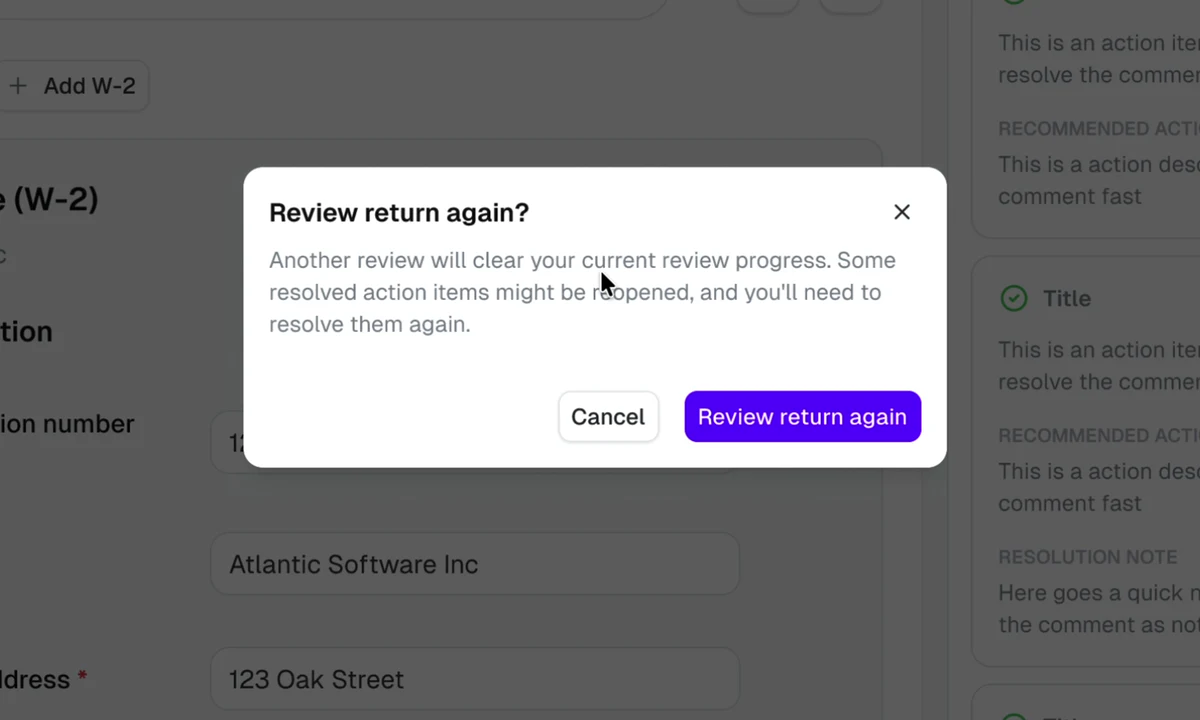
These need another check, but not necessarily another review. The Pro can still review again, and we tell them what it will cost, but we don't push it.
Return-level errors.
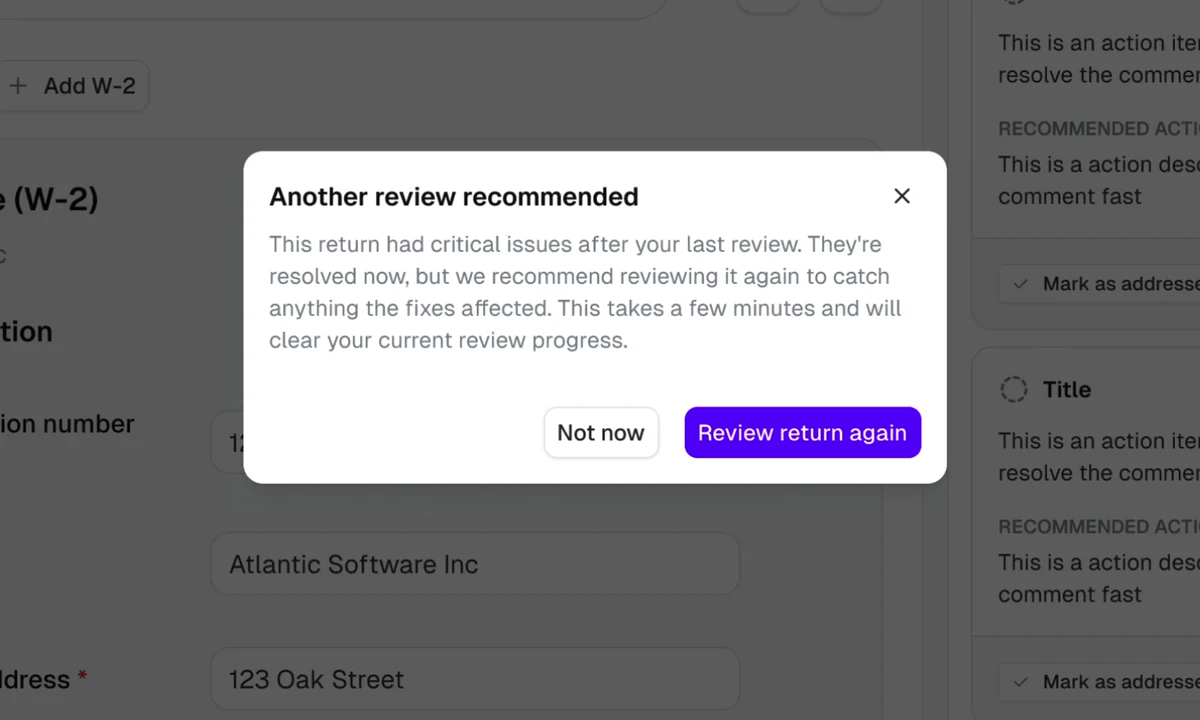
These also need another check, and we recommend another review so the action items reflect the latest version of the return.
Any edit. Blocks marking done until the check runs.
Available, with the cost spelled out: resolved items may reopen.
Only after critical issues. Says why, and how long it takes.
Return-level errors come with a way straight to the fields involved, like both SSNs in a duplicate-SSN error, and a check right where the Pro fixed it.